Pink Beach Komodo Guide
Snorkeling, Swimming & Photography at Indonesia’s Rarest Beach
The Beach That Looks Like Sunset Made Sand
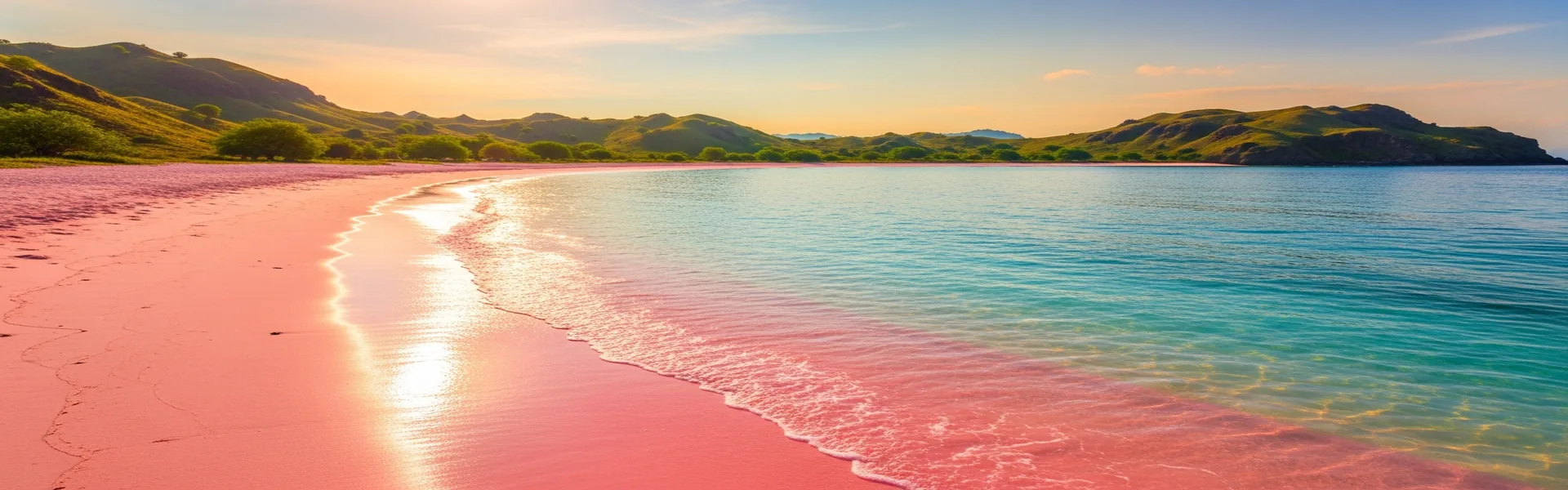
Pantai Merah—Pink Beach—is one of only seven pink-sand beaches on Earth. While the Caribbean and Hawaii have their famous rosy shores, Indonesia’s version is dramatically different. This remote crescent on Komodo’s southwestern coast remains far less crowded, far more pristine, and genuinely pink rather than faintly coral-tinted. The color comes from microscopic fragments of red coral, red algae, and iron oxide-rich volcanic material crushed together over millennia. When sunlight hits at late afternoon, the entire beach glows like a sepia photograph from a dream.
What makes Pink Beach extraordinary for our Lombok-based cruise guests is not just the color but the combination: pristine sand, exceptional snorkeling immediately offshore, warm crystalline water, and genuine tranquility. Day-trippers from Labuan Bajo rarely reach here—the 2-hour boat ride deters them. Your cruise, departing Lombok and approaching from the east, makes Pink Beach a natural morning stop on the multi-day route. You’ll often be the only vessel anchored here.
This guide covers the pink color science, snorkeling conditions, swimming safety, and why conservation of this ecosystem matters more than most tropical destinations.
What Makes Pink Beach Actually Pink?
Red Coral Fragments
The Komodo region hosts pristine coral reefs. Wave action and fish activity break coral into sand-sized particles. Pink/red coral species contribute dramatically to beach color. A single handful contains thousands of coral fragments.
Foraminifera Shells
Microscopic sea creatures called foraminifera have red/pink shells. Millions of these organisms die annually, their shells contributing to the rosy sediment layer. This is the primary pink pigment.
Iron Oxide & Red Algae
Volcanic terrain means iron-rich minerals in the sand. Red coralline algae (Corallina sp.) produces reddish pigments. Together, they create the dusky pink tone.
Why Pink Beach Specifically?
This beach’s sheltered cove and southwesterly aspect mean coral fragments accumulate here rather than washing out. The deeper water offshore means less wave action destroying the delicate color-forming sediments.
Snorkeling Pink Beach: What You’ll See Beneath
Pink Beach’s offshore waters are exceptional. The coral garden extends from the shallows (1-2 meters) to the wall (6-12 meters). Most snorkeling happens in 2-4 meter depths where visibility is outstanding (20+ meters on clear days).
- Hard Coral Gardens: Branching Acropora, massive Porites colonies, and delicate table corals dominate. In peak health seasons (May-July), you’ll encounter spawning events—millions of coral eggs releasing simultaneously, creating a magical snowstorm effect.
- Fish Density: Trevally schools, parrotfish, groupers, and emperors are abundant. Smaller reef fish (damsels, butterflyfish, wrasses) create constant movement and color. Nurse sharks occasionally rest on sand patches (completely harmless).
- Macro Life: Nudibranchs, seahorses, and ornate ghost pipefish hide among corals. These require a keen eye but reward careful looking.
- Turtle Sightings: Green sea turtles occasionally cruise the reef edge. They’re indifferent to snorkelers but approach slowly if you maintain distance.
Swimming & Safety on Pink Beach
Water conditions are generally excellent. April-November (dry season) brings calm waters and brilliant clarity. December-March can feature rough swells and reduced visibility, though swimming remains possible on calm days.
Safety Considerations
- Always snorkel with a buddy. The reef edge drops sharply—stay aware of depth.
- Wear reef shoes to protect feet from spiky coral and sea urchins.
- Use reef-safe sunscreen (no oxybenzone/octinoxate). The reef is fragile enough.
- Stonefish and cone shells hide in crevices. Look before reaching into shadows.
- Current can develop along the reef wall. If swept out, signal your guide and don’t panic—snorkel back parallel to shore.
Photography: Capturing Pink Sand at Golden Hour
The pink color is most vivid in late afternoon (3-5pm) when sunlight hits at a shallow angle. Morning light tends to be more blue-tinged. This timing works perfectly with typical cruise schedules that visit Pink Beach in the afternoon following morning snorkeling elsewhere.
- Shoreline Shots: Wade waist-deep into the water and shoot backward at the beach. The pink sand glowing against blue water is dramatic.
- Underwater: GoPro or waterproof phone captures the reef brilliantly. Shoot toward the sun for vibrant colors and silhouettes of fish.
- Drone (Permit Required): Aerial perspective showing the pink crescent against turquoise water is stunning. Requires separate permissions from the Park Service.
- Avoid Oversharpening: The pink sand’s soft, fine texture suffers if over-processed. Keep editing subtle.
Conservation: Why Pink Beach Needs Your Protection
The coral reefs producing the sand that makes Pink Beach pink are under genuine pressure. Climate change bleaching events, anchor damage from boats, and shell collecting all threaten the ecosystem. Our cruise operations maintain zero-impact practices: mooring buoys prevent anchor damage, we provide reef-safe sunscreen, and we enforce strict no-taking policies.
You can contribute by never touching coral, never collecting shells, and reporting any boat captains you see anchoring directly on reefs. Your visit funds conservation research through entry fees that flow to park management and scientist salaries.
Your Pink Beach Questions Answered
How many other boats are usually at Pink Beach?
Often zero to two other vessels. Unlike Padar or Komodo, Pink Beach receives few cruise-boat visits. You might see a local fishing boat, but chances of substantial crowds are minimal. This isolation is part of its charm.
Will the sand stain my clothes?
The pink color is iron oxide and coral fragments, so yes—it can transfer temporarily. Wear swimwear that you don’t mind staining, and rinse thoroughly with fresh water. Dry saltwater washing is preferable to sea-water dunking.
Is it better than the Caribbean pink beaches?
Different. Komodo’s Pink Beach is pinker (more authentic coral-based color), less developed, and has superior snorkeling directly offshore. Caribbean pink beaches are often more developed with resorts and restaurants. Choose based on what appeals: pristine solitude or comfortable infrastructure.
What’s the best time to visit?
May-October (dry season). Water is calmest, visibility is highest, and weather is most predictable. April and November are transitional months with good conditions. December-March sees occasional rough seas.
Experience Pink Beach on Your Lombok Cruise
Snorkel pristine reefs and swim on Indonesia’s rarest beach. Most cruise itineraries from Lombok include Pink Beach as a standard stop.
+628113809193 | sales@balipremiumtrip.com