Whale Sharks Saleh Bay from Lombok

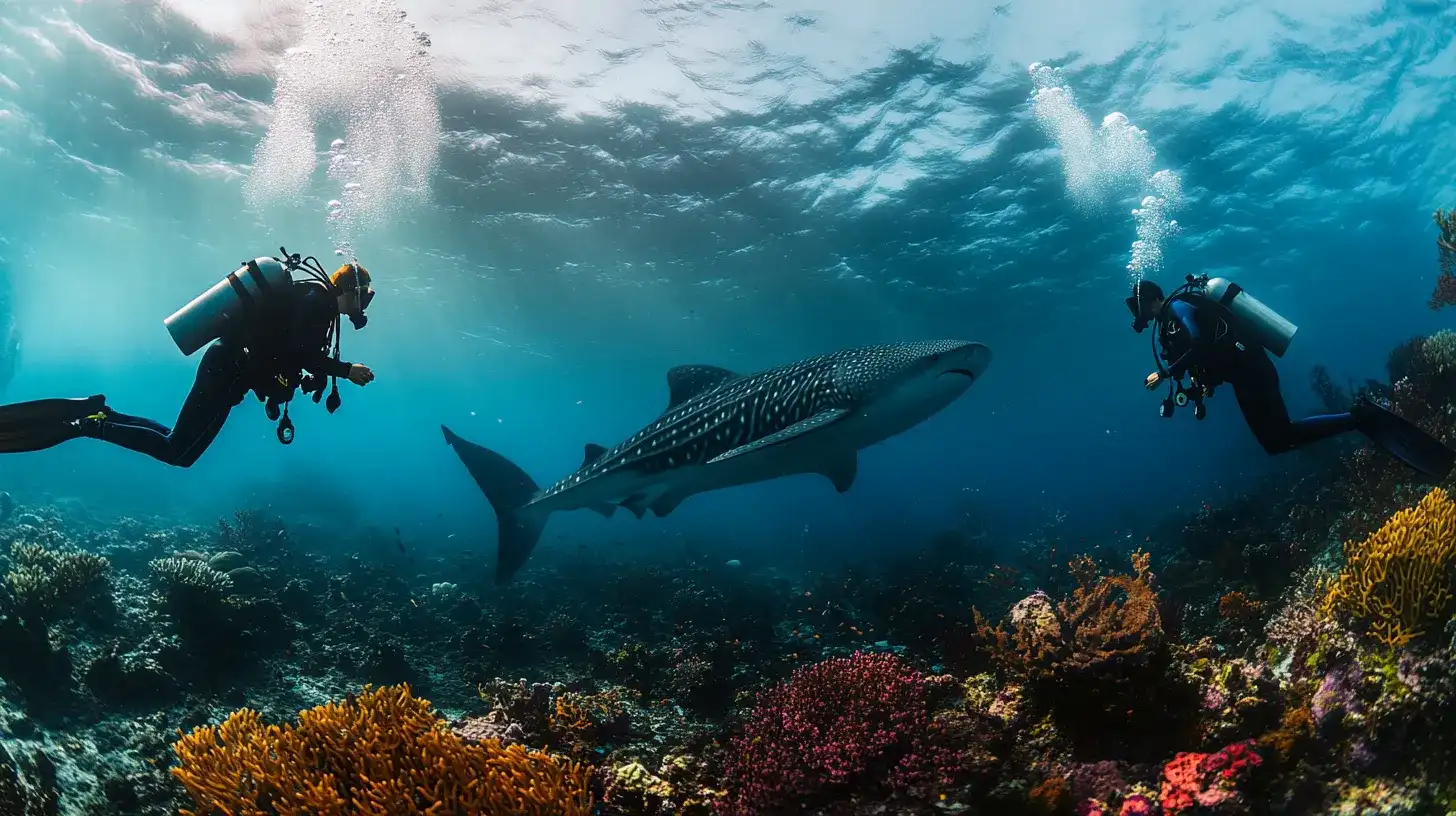
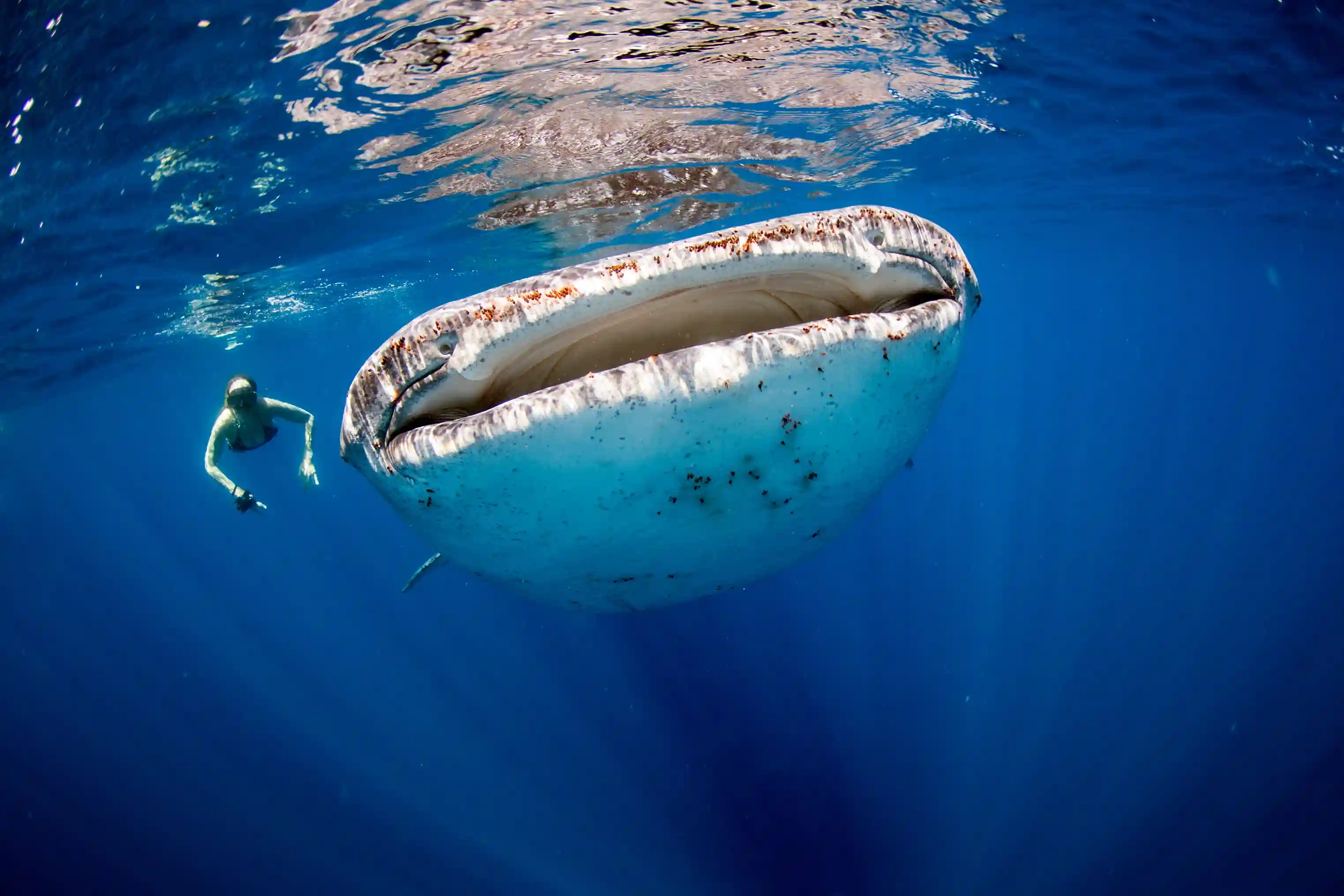
Whale shark in deep blue Saleh Bay Sumbawa

Whale Sharks Saleh Bay Lombok

Swim with Gentle Giants on Your Komodo Cruise

Swimming with Earth’s Largest Fish—From Your Lombok Gateway

Few experiences match the spiritual intensity of swimming alongside a whale shark. This 40-ton fish, measuring up to 18 meters, is entirely harmless to humans—a filter feeder consuming plankton, not flesh. Yet facing one in open water triggers something primal: awe, humility, and profound connection to ocean wildness.

Saleh Bay, the waters between Sumbawa and Flores, hosts seasonal whale shark aggregations (March-September). Our Lombok-to-Komodo cruises pass directly through this zone, and we maintain local spotter networks that radio whale shark sightings to vessels. Encounters are not guaranteed but occur frequently enough that most cruises departing April-June report sightings.

Unlike commercial whale shark tourism in Mexico or the Philippines, Saleh Bay encounters happen during your natural cruise transit—not at dedicated whale shark theme parks. You’re not visiting captive animals or commercial feeding zones; you’re witnessing genuinely wild behavior in pristine, protected waters.

Whale Shark Biology: What You’re Encountering

Size & Scale

Adult whale sharks in Saleh Bay average 10-15 meters (33-49 feet). The largest recorded was 18.8 meters. They weigh 20-40 tons. For perspective: longer than a school bus, heavier than a semi-truck.

Diet: Plankton, Not People

Filter feeders exclusively. They consume 15-20 tons of food daily—primarily fish eggs and crustacean larvae during seasonal abundance. Zero interest in humans. They have tiny throats (5cm) and no functional teeth for anything larger than plankton.

Saleh Bay Seasonality

March-September concentrates plankton blooms triggered by upwelling and seasonal currents. Peak activity: April-June. July-August sees reduced numbers but occasional encounters. October-February: very rare.

Behavior While Swimming

They maintain steady surface cruising while gulping plankton. They won’t approach boats or swimmers unless you’re directly in their path. Movement is slow and predictable. They can be curious but are generally indifferent to human presence.

Responsible Whale Shark Interaction Guidelines

The Indonesian Wildlife Code and Saleh Bay regulations govern all whale shark encounters. Our crews follow strict protocols developed by marine conservation organizations.

  • Approach Protocol: Boats approach at slow speed, parallel to the shark’s path. No direct blocking of movement. Engines cut if approaching closer than 30 meters.
  • Snorkel Conduct: Enter water 10+ meters ahead of the shark, allowing it to pass beneath you naturally. No chasing, no aggressive swimming, no touching. Let the shark approach you.
  • Duration Limits: Maximum 30-minute interaction per shark. Our skippers monitor fatigue—we pull swimmers if behavior shows disturbance.
  • Flash Photography Prohibited: Camera flashes stress the shark. Only natural-light or fill-light photography permitted.
  • No Feeding: Zero tolerance for baiting or chumming. We encounter wild sharks actively feeding—no artificial lures.

What the Experience Actually Feels Like

You’re floating in 25-meter-deep water, crystal clarity beneath you. The spotter radios confirmation—whale shark 500 meters ahead. Your captain maneuvers the boat while your guide briefs the snorkel team. Heart rate elevated, adrenaline sharp.

You jump from the platform. The water is warm, slightly murky from plankton (the same nutrients drawing the shark). You scan, seeing nothing. Then—a shadow. Massive, moving steadily. The shark emerges from blue-haze into definition: checkered white pattern on dark gray skin, enormous mouth gaping open, gills rippling.

It passes 2 meters below you. You’re hyperaware of your fragility—your entire body is smaller than its head. Yet there’s complete non-aggression. The shark is feeding, methodical, utterly indifferent to your existence. It continues past, mouth closing, and disappears into the blue. The entire encounter: 45 seconds.

You surface, breathing hard, words abandoning you. Your guide is grinning. “Good one” is all anyone can manage.

Common Whale Shark Questions

Are encounters guaranteed on your cruises?

No. Whale sharks are wild animals. April-June sees 70-80% encounter rates; July-September drops to 40-50%. We operate spotting networks and adjust routes, but sightings depend on fish stocks, water temperature, and luck. We offer no refunds for non-sightings—the experience is the journey, not a guaranteed checkbox.

Is it safe to swim next to a 40-ton fish?

Completely safe for humans. Whale sharks have never attacked snorkelers. Your actual risks are drowning (wear lifejackets), dehydration, and sunburn—not shark aggression. Follow crew instructions and you’re entirely protected.

Can I touch the shark?

No. Physical contact is prohibited by law and ethics. The shark’s skin is sensitive; touch causes stress and potentially damages its protective mucus layer. Observe only. Many guests feel this guideline disappointing until they realize that avoiding touch actually makes the encounter more profound—you’re respecting a wild animal in its own space.

What if I can’t swim well?

Wear a snorkel vest (provided on all our cruises). You’ll float effortlessly. The experience is 90% about being in the water; swimming skill is minimal. Weak swimmers often have the most memorable encounters because they’re calm, floating—exactly the non-threatening posture sharks are indifferent to.

Experience Whale Sharks on a Lombok Cruise

April-September departures offer the highest encounter probability. Book your Saleh Bay adventure today.

Chat on WhatsApp

+628113809193 | sales@balipremiumtrip.com

Scroll to Top